
Share Henry A Weikel Kia Ww1's obituary with others.
Invite friends and family to read the obituary and add memories.
Stay updated
We'll notify you when service details or new memories are added.
You're now following this obituary
We'll email you when there are updates.
Select your format and elements to print

IN LOVING MEMORY OF Henry A Weikel Kia Ww1
Henry A
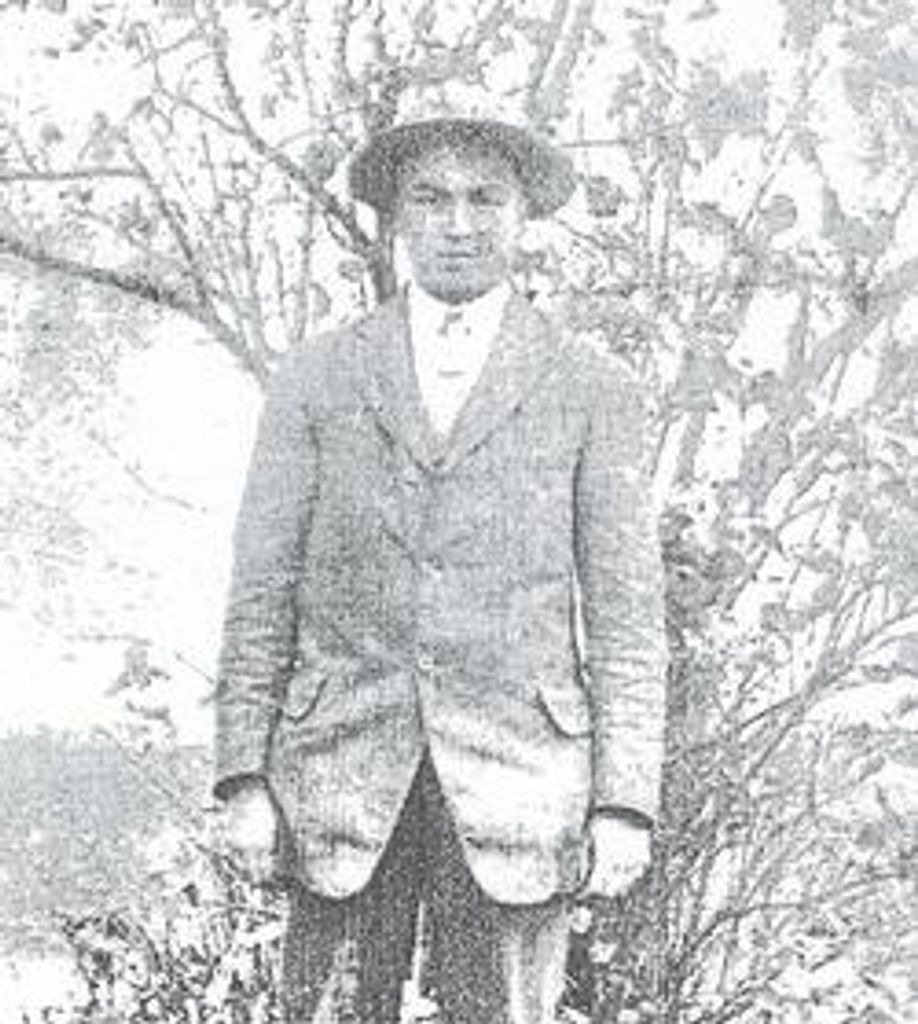
Weikel Kia Ww1
Dec 2, 1889 — Sep 16, 1918
Lavelle
Henry A Weikel Kia Ww1's Obituary
Click here for the Video of Henry Weikel's Funeral Honors
Henry A. Weikel KIA WW1 September 16th, 1918 Repatriated.Henry A Weikel, Killed in action 1918 in France, finally received a full military funeral 92 years after losing his life in the service of his country. He arrived at the Philadelphia airport on Monday December 6th 2010 just before noon with plane side military honors with the Patriot Guard Riders present on the tarmac. He was escorted by the Pennsylvania State Police Troop "K" and "L"to Mahanoy City were he was met with the American Legion and Patriot Gaurd, as well as assistance from the Mahanoy City Fire Department, Mahanoy City Fire Police and Mahanoy City Police Department.
A funeral was held at the Louis D. Truskowsky Funeral Home Inc. Mahanoy City on Thursday December 9th.
A procession followed for a Burial Ceremony with full Military Honors and an escort by the Patriot Guard and the Pennsylvania State Police to the National Cemetery at Fort Indiantown Gap, Annville. The Military Honors took place in the Pennsylvania Veterans' Memorial which is the largest monument in Veterans Administrations National cemeteries. Its design evokes "the ruins of a war-torn building centered in a land of solemnity."
Below are excerpts of the Military details of Henry Weikels death while serving in the Army in WW1. In September 1918, General John J. Pershing led the American Expeditionary Forces (AEF) as the Allies pushed deeper into German lines in eastern France. The Battle of Saint-Mihiel was the first for the American fighting force under its own command rather than subordinate to the experienced French military generalship. The Allies planned to strike the south and west salient of the enemy forces and attack from the Meuse to the Argonne forest.
The attack by the First Army began at 1 a.m. on 12 September 1918, and the Americans moved steadily to their objectives, dramatically reducing the German salient by 18 September. The American victory greatly improved the American morale, instilling confidence among the men that they were a superior fighting corps. The victory also demonstrated to the Allies that the addition of the AEF had decisively turned the tide against the enemy. The AEF eliminated the Saint-Mihiel 1 Historical Division. St.-Mihiel, Military Operations of the American Expeditionary Forces, United States Army in the World War 1917-1919. Historical Report: WWI Incident 4 of 16 salient that threatened the Allies southern flank at the cost of more than 7,000 dough boy casualties. The 5th Infantry Division brought the battle to the Bois de Bonvaux, a wooded area east of Jaulny and south of Rembercourt. The tree line is nearly the same today as it was eighty-nine years ago in September 1918. On the evening of 16 September 1918 the60th Infantry Regiment went over the top, advancing to positions within the Bois deBonvaux.
The regimental records show that on 16 September the 60th Regiment was positioned south and west of the Tautecourt Farm and prepared to advance into the Boisde Bonvaux as evening fell. The action described in the unit history records that "H" hour had been set for 1800 hours. Ten minutes before the departure time for their objective "one kilometer in advance of the northern edge of Bois de Bon Vaux," the enemy volleyed a heavy and accurate barrage. At 1810, the battalion advanced despite considerable casualties during a second barrage and against machine gun fire.
The battalion reached its objective, there digging in and holding the position until relieved by a battalion of the 312th Infantry Regiment at 0300 on the morning of 17 September 1918. Captain Edwin F. Post, commander of "H? Company of the 60thInfantry Regiment, reported the statement of First Sergeant Engdahl of "H" Company who had witnessed the death of Pvt Costello.
The Company was just digging in, in a new position in the Boisde Bonveau (sic), about 7:30 p.m. September 16th, 1918, when Pvt. Costello was hit on the head by a piece of high explosive shell which exploded in the midst of a group of men, killing two instantly. I picked him up and endeavored to stop the flow of blood, but it was impossible with the means at hand. I tried to get him to speak but he never regained consciousness and died in a very few minutes. Several other casualties were sustained by the 60th Infantry Regiment in this first assault into the wood. The American Battle Monuments Commission records the names of 29 soldiers of the 60th with date of death 16 September 1918 and four others as missing. The missing individuals for the 60th Infantry Regiment are Sergeant William Wood, Pvt Thomas D. Costello, Pvt Henry A. Weikel, and Pvt Carl H. Willig. At least two other "H" Company, 60th Infantry Regiment soldiers who had been listed as missing from this action as late as November 1922 were subsequently identified by the American Graves Registration Service. Those casualties whose remains were successfully recovered and repatriated to the United States at the request of the family are not recorded in the records presently available.
Pvt Henry Albert Weikel hailed from Mt. Carmel, Pennsylvania.7 Pvt Weikels file also includes a similar statement from 1st Sgt Engdahl, naming Pvt Weikel and two others as having been killed within the wood, but other correspondence with 1st Sgt Engdahl does not mention Pvt Weikel by name. In 1931, Pvt Weikels mother, Eliza Weikel, at age 60, joined a Gold Star Mothers Pilgrimage to the St. Mihiel battle zone where her son was lost. Despite Mrs. Weikels profound deafness and ill health during he journey aboard the S.S. Roosevelt to France, and then returning on the S.S. George Washington, the Gold Star Mothers Association and the War Department brought her safely home. The handles of her bag, however, were pulled loose and efforts to repair them in France evidently did not succeed. Subsequent searches of the wood conducted under the direction of the American Graves Registration Service failed to relocate the grave or recover remains that could be identified as among those known still to be missing within the Bois de Bonvaux. On 8June 1921 the Cemeterial Division of the Office of the Quartermaster General noted that the grave location of Pvt Costello was still "unconfirmed" and that all of the bodies from isolated graves had been consolidated to the Thiaucourt or Romagne cemeteries. On 19 May 1922 the Chief of Operations for the American Graves Registration Service directed a thorough search of the Bois de Bonvaux for five "H" Company soldiers who were believed interred in the woods. This directive lists Privates Costello, Weikel, and Willigas well as Pvt Shallow and Pvt Adam Spohn. The notation indicates that Pvt Shallow had been identified previously, and later research determined that Pvt Spohn had also been identified and his remains permanently interred in the Meuse-Argonne American Cemetery in Plot H, Row 43, Grave 37. On 20 July 1918 the Graves Registration Service noted that a physical search of several days within the Bois de Bonvaux had not had satisfactory results. On 25 November 1923 the headquarters of the Meuse-Argonne Cemetery reported that physical investigation of the recorded burial location had been conducted including opening former trenches, shell holes, and other depressions without result. During a 2006 Joint POW/MIA Accounting Command Recovery mission to Europe, Mme Elisabeth Gozzo, a resident of Corny-sur-Moselle, France, informed the recovery team operating in the Foret de Parroy in Lorraine that she had learned of a recent discovery of possible remains of American "dough boys." The JPAC team visited the site, evaluated the recovered material, and initiated a small scale excavation.Due to limited recovery time, the site was suspended on 28 September 2006. The comparison of the coordinates from Pvt Costellos Grave Location Blank and the site recovery location documented by the JPAC archaeologist demonstrates the close match between the two locations and provides considerable circumstantial evidence that the remains recovered by the JPAC team are associated with the three "H" Company enlisted men killed within the Bois de Bonvaux at approximately 7:30 p.m. on the evening of 16 September 1918.
Henry A Weikel Kia Ww1's Guestbook
This site is protected by reCAPTCHA and the
Google Privacy Policy and Terms of Service apply.
Service map data © OpenStreetMap contributors